The TERA-Award 5th UK Roadshow was successfully held at Sustainable Ventures in London on 26 March 2026. Co-hosted by Full Vision Capital and Cambridge Institute for Sustainability Leadership (CISL), the event brought together leaders from investment, academia, and industry to explore how breakthrough energy technologies can move from lab to market—fast enough to meet the demands of the global energy transition.
EVENT DETAILS:
📅Date: Thursday, 26 March 2026
📍Venue: Sustainable Ventures, London
⏰Time: 16:30 – 20:00
EVENT HIGHLIGHTS:
🔹Opening Remarks: From Innovation to Market Reality
“We Have the Technologies We Need — Now Markets Must Evolve”
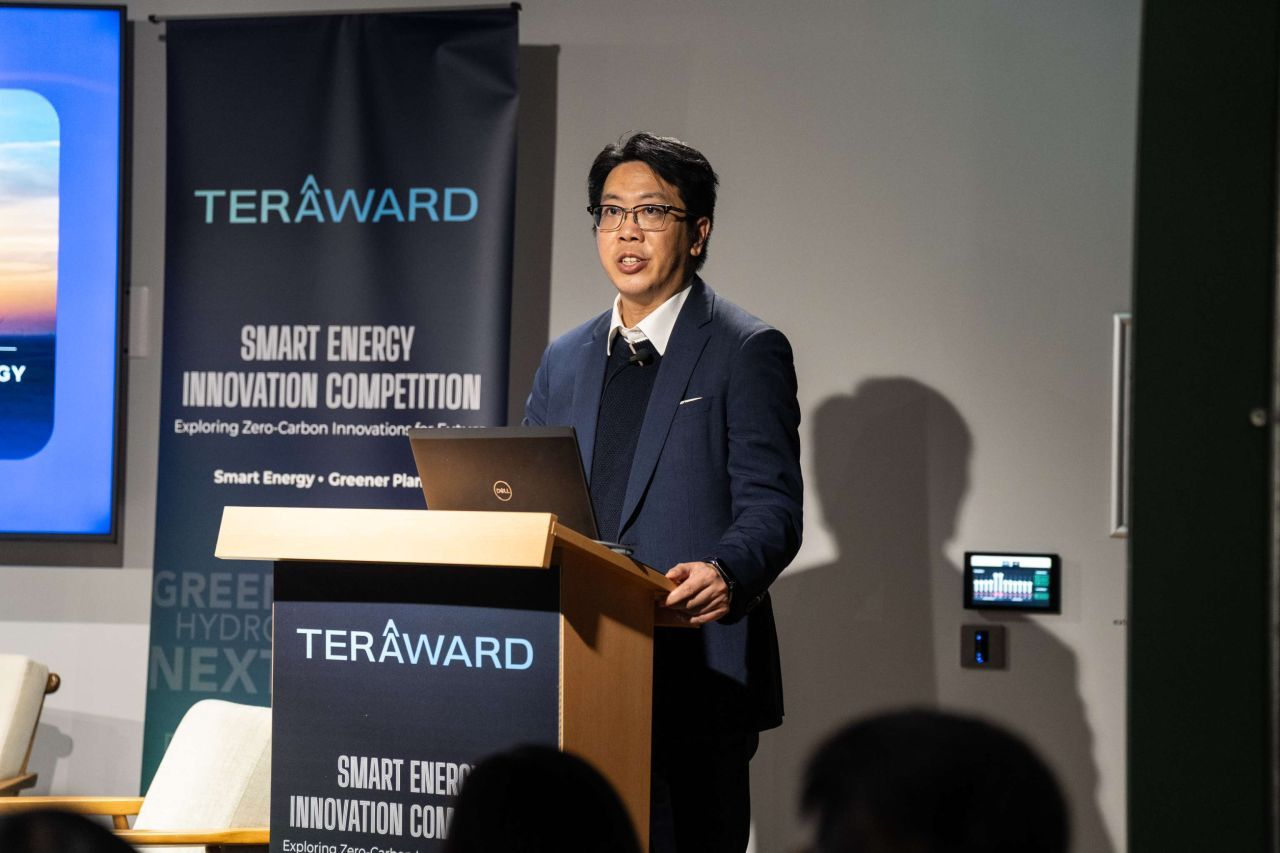
James Cole, Executive Director and Chief Innovation Officer at CISL, opened the event with a stark reminder of the urgency driving innovation. Referencing new data on global energy imbalance, he highlighted that oceans are absorbing energy at a rate equivalent to more than 18 times annual human energy use – contributing to the hottest decade on record. “The barrier to net zero is no longer just a question of technology; it is a question of market evolution,” Cole emphasized. While the world possesses the necessary tools for decarbonization, the missing link remains commercial viability. This urgency underscores the TERA-Award’s mission to transform abstract climate risks into scalable economic opportunities.
🔹Building a global platform for climate innovation
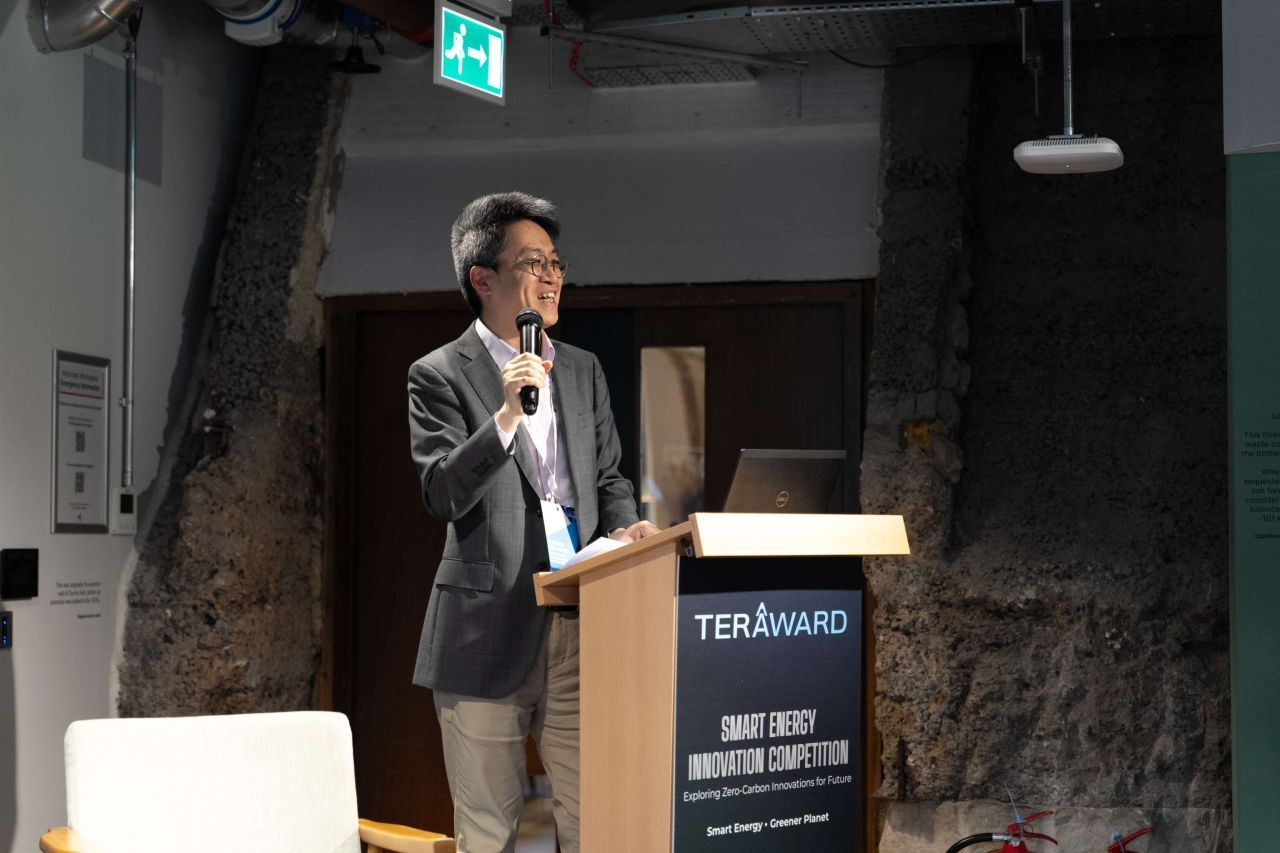
Jerry Hu, Managing Director of Full Vision Capital, articulated the expansive vision defining the TERA-Award. “We are building more than a competition; we are cultivating a global platform that bridges the divide between visionary innovators and the capital, expertise, and market access required for world-changing impact”.
With a rapidly expanding community of over 1,700 startups across 170+ countries, the TERA-Award is uniquely positioned to identify and nurture the next generation of climate leaders. By providing a $1.15 million cash prize alongside strategic resources backing, the program acts as a catalyst for the commercialization of deep-tech solutions that the planet desperately needs.
🔹Keynote: From decarbonisation to energy security
CISL’s Head of International Innovation , Jie Zhou, led a keynote that highlighted a significant shift in the energy narrative.
While pre-2022 innovation focused heavily on decarbonisation, today’s startups are increasingly framing their solutions around energy security, resilience and cost efficiency – reflecting geopolitical tensions and Europe’s energy vulnerabilities.
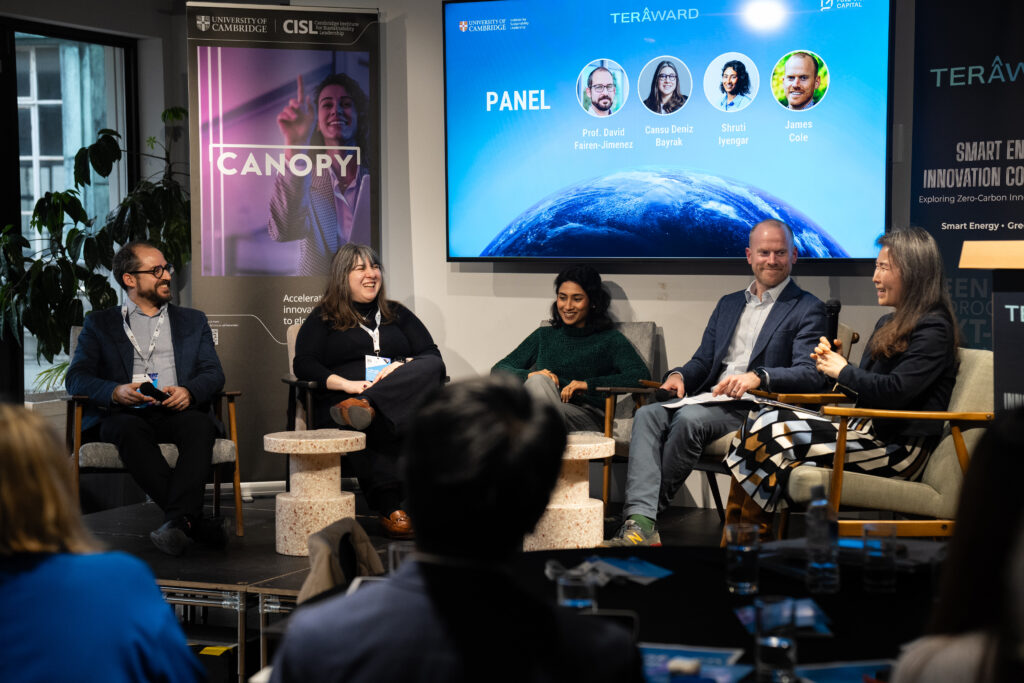
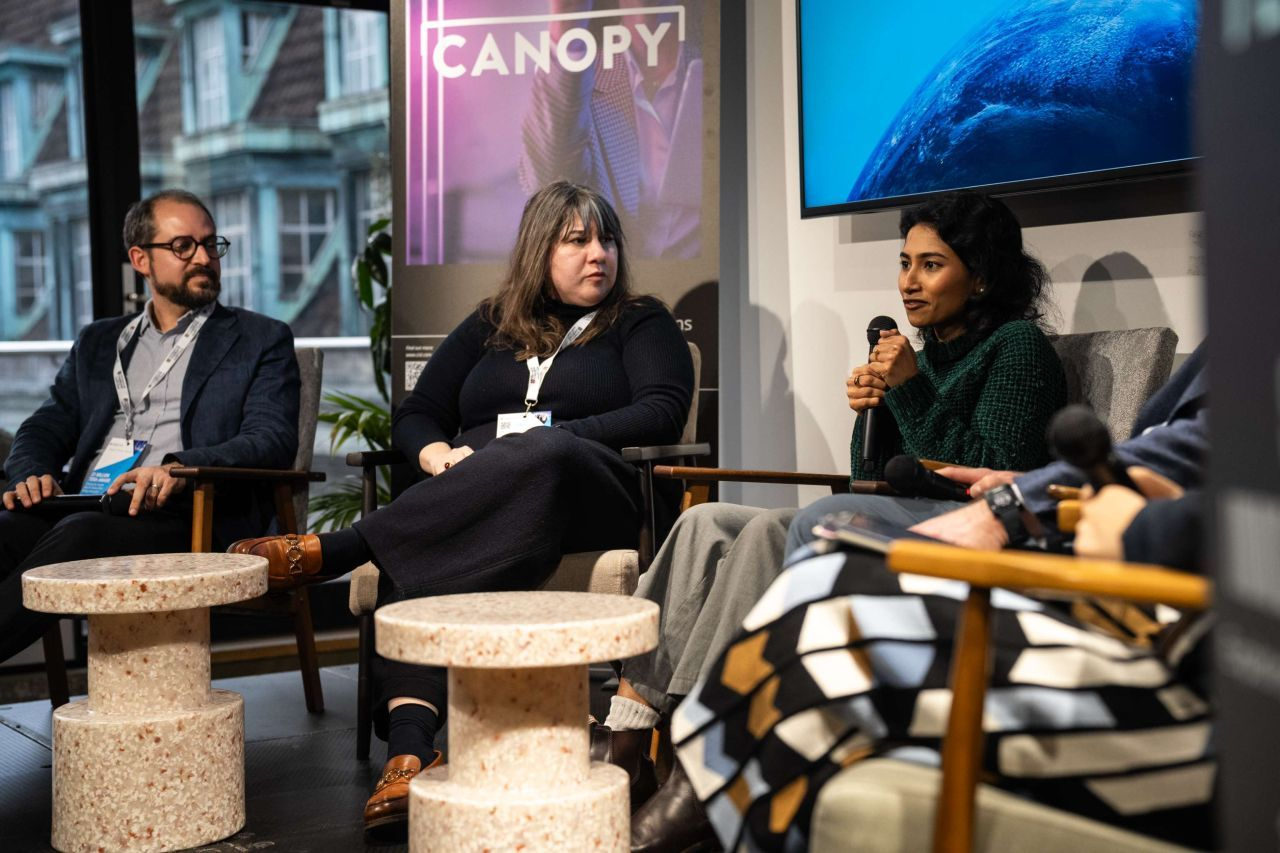
🔹Panel Discussion – The scaling challenge: capital, talent and mindset
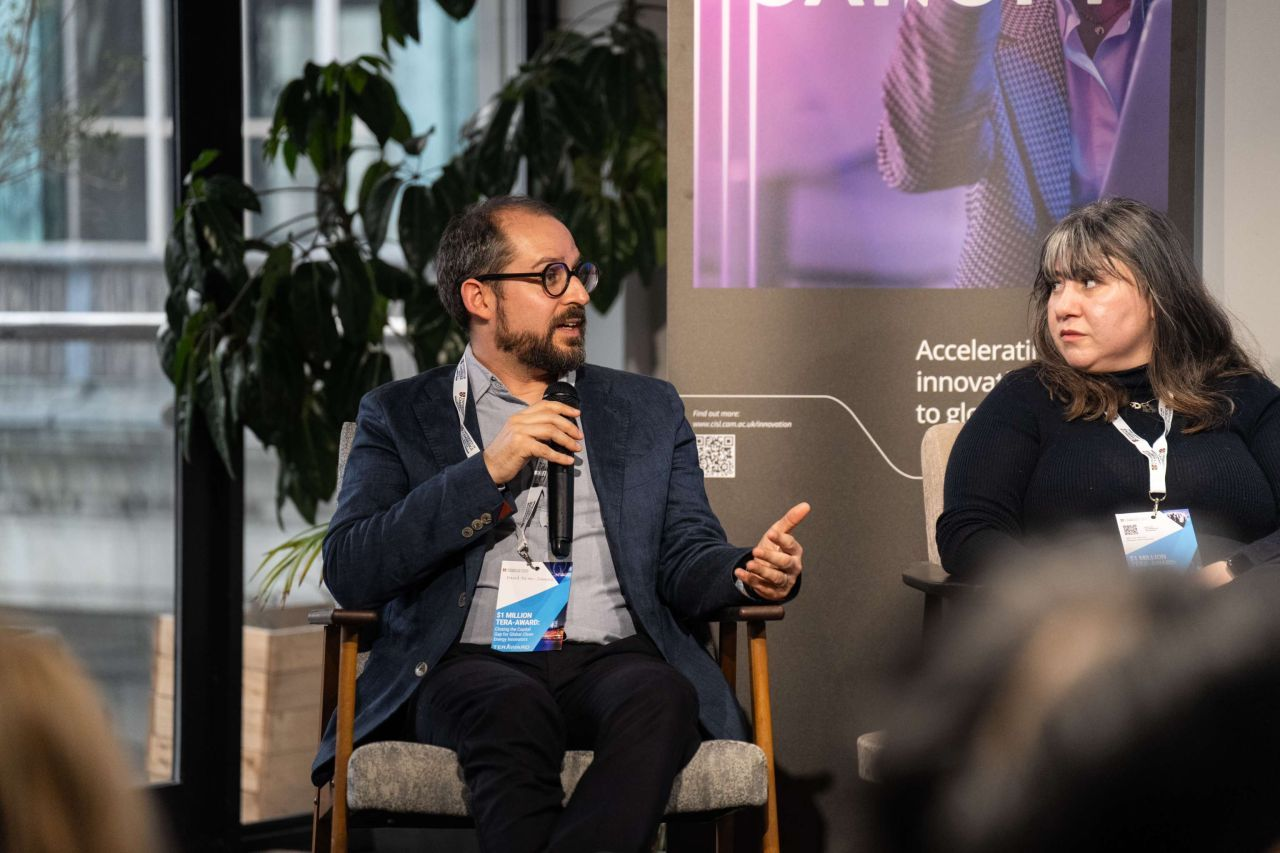
A panel featuring leaders across startups, venture capital and policy unpacked the barriers to scaling climate technologies.
Shruti Iyengar, Investment Director at Future Planet Capital, emphasised that many startups struggle not with technology, but with demonstrating commercial traction at scale – particularly at the Series A stage.
She also pointed to cultural differences in risk appetite, noting that European founders often underplay ambition compared to US counterparts.
Cansu Deniz Bayrak, Impact Capital Advisor, reinforced the need for systemic change – highlighting capital and talent as the two critical levers. Policy measures such as unlocking pension fund investment and improving founder incentives were identified as key to turning the UK from a “startup nation” into a “scale-up nation.”
Discussions also focused on the role of universities and ecosystems in translating research into real-world impact.
While institutions like Cambridge produce world-class IP, speakers noted that much of it remains uncommercialised. Greater support is needed to bridge the gap between academic discovery and market deployment – particularly for capital-intensive deep tech.
At the same time, collaborations between corporates and startups are proving critical. Programmes that connect early-stage ventures with large organisations are accelerating routes to market and enabling real-world validation.
🔹Fireside Chat: The impact of winning the TERA-Award
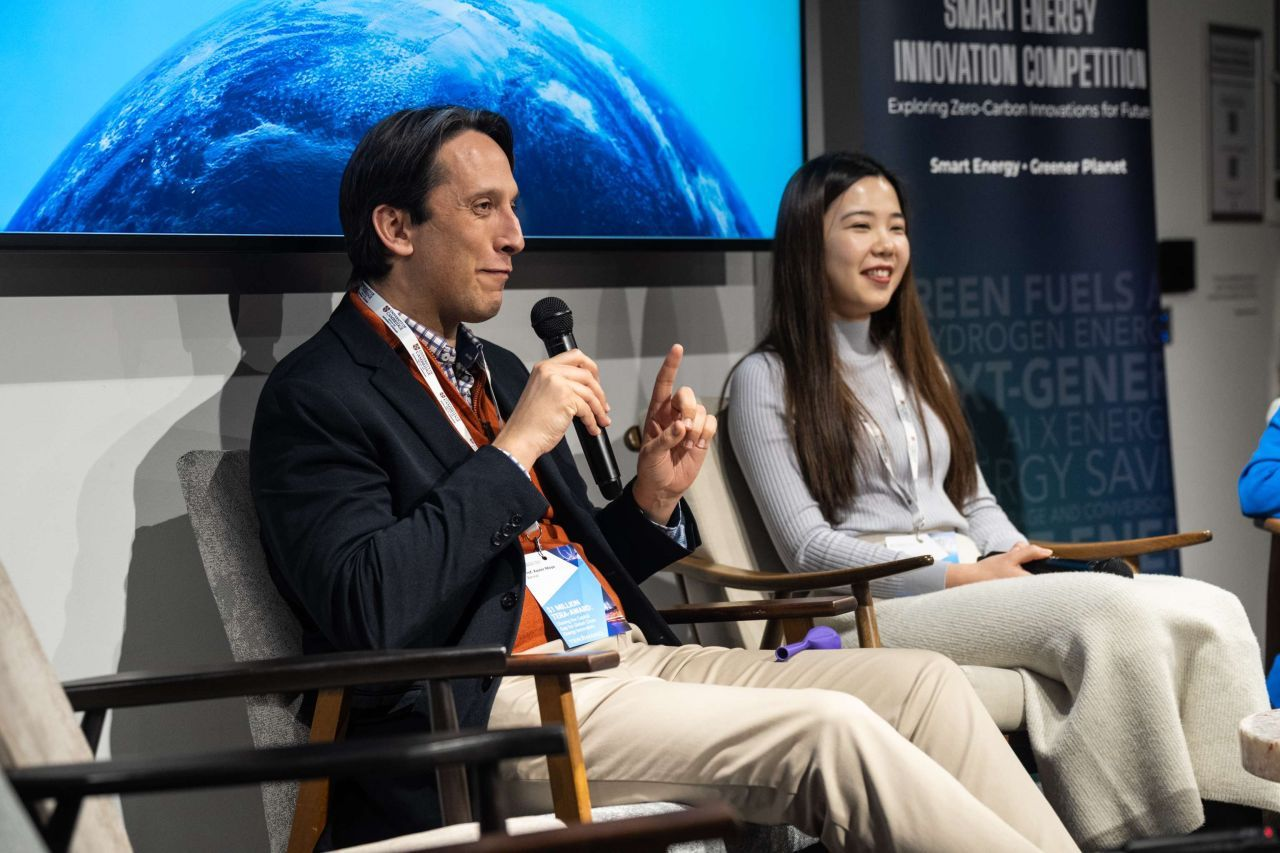
Zoe Kalus, CISL’s Head of Media, closed the event with a fireside chat that spotlighted last year’s TERA-Award winner, Professor Xavier Moya, professor of Material Physics at the University of Cambridge and founder of Barocal.
His company is developing solid-state cooling technology that could replace traditional refrigeration systems. With heating and cooling accounting for around 40 per cent of global emissions, the potential impact is substantial. Since winning the award, Barocal has scaled rapidly, expanding its team, facilities and commercial readiness.
Doris Pan, Director at Full Vision Captial, concluded the session by reinforcing a broader theme: the energy transition will not be a battle between incumbents and disruptors, but a collaboration – combining infrastructure, capital and innovation to accelerate deployment.
The TERA-Award 2026 is now seeking the world’s most promising energy innovators. We are committed not just to celebrating innovative ideas, but to funding their execution.
-1920x1280.jpg)
-1920x1280.jpg)
-1920x1280.jpg)
-1920x1280.jpg)
-150x150.jpg)
-150x150.jpg)
-150x150.jpg)
-150x150.jpg)